

Soccer is a fast-paced, high-demand sport that tests your speed, agility, endurance, and coordination. Whether you’re a weekend warrior, club-level player, or rising junior star, injuries are often an unavoidable part of the game.
At BodyMotion Physiotherapy, we are experts in soccer physiotherapy in Melbourne, helping players recover, rehabilitate, and return to peak performance safely and efficiently.
From ankle injuries and groin strains to specific soccer knee pain treatment, our experienced physiotherapists provide tailored care to help you get back on the pitch with confidence.
The physical demands of soccer, like constant changes in direction, sprinting, kicking, tackling, and jumping, place strain on nearly every part of the body. Without appropriate strength, flexibility, and recovery strategies, players face a higher risk of both acute injuries and chronic overuse conditions.
Frequent soccer injuries requiring treatment:
With our comprehensive soccer physiotherapy approach, we treat the injury and address the root cause, guiding you through complete rehabilitation.
From juniors in development squads to weekend park players and semi-pros chasing their next season, we tailor care to your goals and schedule.
Whether you’re dealing with ankle instability, struggling with knee pain after training, or simply want a performance edge, we’re here to support your game.
We’re also trusted by:
At BodyMotion, our soccer rehab framework is structured around phases that promote safe healing, gradual progress, and peak performance.
We conduct a comprehensive functional assessment, taking into account your playing position, training load, and biomechanical characteristics. Accurate diagnosis ensures effective treatment.
Using hands-on techniques, dry needling, and mobility drills, we reduce inflammation, restore joint movement, and alleviate pain.
Rebuilding muscular strength and control is crucial. We target weaknesses across the kinetic chain to prevent compensation and future issues.
We integrate soccer rehab exercises that mimic real match demands – acceleration, deceleration, cutting, pivoting, and kicking.
Using objective testing and monitoring, we ensure you’re ready to rejoin training and games with confidence.


Lateral ankle sprains are one of the most common soccer injuries. Whether it’s from a bad landing or a slide tackle gone wrong, ligaments can be stretched or torn.
Common ankle injuries requiring soccer treatment include:
We guide players through each stage, ensuring stability is restored and the risk of re-injury is minimised.
Quick directional changes, kicking, and rapid acceleration put immense strain on the groin muscles and tendons.
Groin injuries requiring soccer treatment may involve:
Without proper management, groin injuries can become chronic. We prevent that by targeting both strength and biomechanics.
Repetitive kicking, poor landing mechanics, and muscular imbalances contribute to soccer knee pain. Whether it’s patellar tendinopathy (jumper’s knee), ITB compression syndrome, or early-stage meniscal irritation, the right diagnosis is key.
Specific soccer knee pain treatment includes:
For post-surgical cases, such as ACL or meniscus repair, our structured soccer rehab programs bridge the gap between clinical rehabilitation and full on-field performance.
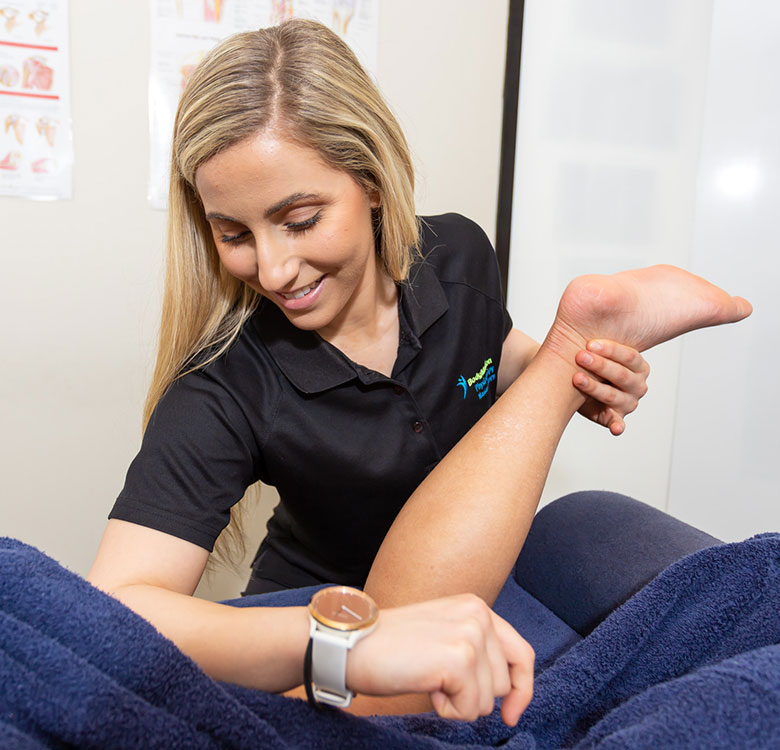

From juniors in development squads to weekend park players and semi-pros chasing their next season, we tailor care to your goals and schedule.
Whether you’re dealing with ankle instability, struggling with knee pain after training, or simply want a performance edge, we’re here to support your game.
We’re also trusted by:
Don’t let injury sideline your passion. Whether you’re recovering, prepping for a big match, or chasing performance gains, BodyMotion Physiotherapy offers expert soccer physiotherapy in Melbourne designed to keep you on the ball.
Contact us to find the best time to kickstart your recovery.
Ankle sprains, groin strains, hamstring tears, and knee pain (like patellar tendinopathy) are the most common. We treat all these through personalised soccer rehab.
Mild groin strains can heal in 2–4 weeks, while chronic adductor issues may take 6–8+ weeks depending on severity and rehab compliance.
Yes. We support individuals and clubs with injury prevention sessions, sideline advice, and return-to-play protocols across Melbourne.
Rest, ice the affected area, avoid aggravating movement, and book an assessment. Early intervention shortens downtime and prevents further damage.
Absolutely. We optimise mobility, strength, and biomechanics to improve speed, agility, kicking, and overall match fitness – not just recovery.
A Relaxation Massage is a great way to pamper yourself, reduce stress and recharge your energy levels. Using a combination of relaxing massage strokes, usually with a lighter pressure, you can opt for a full body massage or choose the areas you would like to have massaged which can include the back, shoulders, legs, feet, arms, hands, neck, head and face.
This is a therapeutic remedial Maintenance Massage which may be recommended to you by your physiotherapist and aims to help you to maintain the results that you have achieved from your Physiotherapy treatments. This massage will be targeted to the area that you had treated by your physio, and will ensure that the muscles continue to work well together to keep you free of pain.
A remedial Therapeutic or Deep Tissue Massage is generally a deeper, firmer pressure and will target particular areas of tightness and restriction in your muscles. You will be asked to provide feedback throughout this massage to assess if the level of pressure is suitable for the area.
A remedial Sports Massage can help to ease any muscular pain post workout or after you have participated in a sporting activity. It can also be beneficial prior to a sporting event to ensure that your muscles are at their peak state, therefore assisting you to perform at your highest possible level.