
From weekend warriors and gym newbies to seasoned lifters and group training enthusiasts, exercise-related injuries can catch anyone off guard. Whether you’re nursing a sore elbow after lifting weights or recovering from an unexpected gym strain, expert physiotherapy can help you bounce back stronger and smarter.
At BodyMotion Physiotherapy, we support active individuals across all training styles with tailored rehab, pain relief, and performance-driven strategies.
If you’ve sustained an injury or want to prevent one, you’re in the right place.
Our rehab gym in Melbourne is fully equipped to get you back to your training environment safely and efficiently.
Here’s what we focus on:
From rehabilitation for gym injuries to fine-tuning your form, we help you move better and train smarter.
Regular workouts bring incredible health benefits, but poor technique, overuse, or insufficient recovery can lead to setbacks.
Some of the most common injuries we treat include:
Whether it’s from F45, gym workouts, yoga, or your own training plan, if you’re hurting, our physios will build a tailored plan to promote recovery and strength.
Most exercise injuries occur because of:
A physiotherapist will treat the injury, but we will also address the root cause, so it doesn’t recur.
If you’re lifting regularly, these are injuries we see most often:
Area | Common Injuries |
|---|---|
Rotator cuff strains, labral tears, and impingement | |
Tendinopathy, joint overload, lateral epicondylitis | |
Disc irritation, lumbar strains | |
Patellar tendinopathy, tracking issues | |
Tension headaches, muscle strains |
Experiencing elbow soreness from lifting weights, or a headache when lifting weights? These aren’t just “part of the process”; they’re signs that something needs to change.
Physiotherapy gives you the tools to train without pain.

Even if you’re not injured yet, sports physiotherapy can be a game-changer for injury prevention, mobility, and longevity in training.
We’ll assess:
With that, we design a strengthening and mobility plan to keep your lifting, squatting, pressing, and running pain-free.
Book in if you’re experiencing:
Early treatment prevents injuries from worsening and helps you stay consistent with your training.
These exercises are staples in our injury prevention programs:
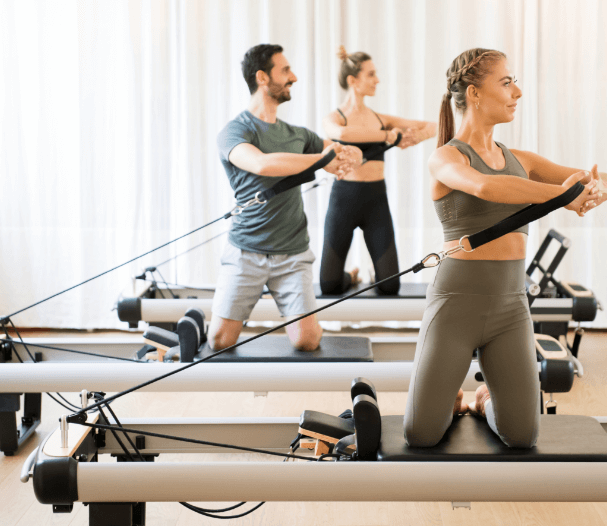
We’ll tailor your injury prevention plan to your training style, whether it’s clinical Pilates or a 12-week hypertrophy block.
We provide targeted support for:
Wherever you train, we’ll help you rehab with purpose and return with confidence.

Let’s get you back to moving well and training without setbacks. Contact us to book your session with a BodyMotion physiotherapist.
We often treat muscle strains, joint sprains, tendinopathy (especially in the shoulder, elbow, and knee), lower back pain, and injuries from poor technique or overtraining. If you’re experiencing pain from lifting weights or after F45, Pilates, or outdoor training, we can help.
Absolutely. Elbow soreness from lifting weights often stems from tendinopathy or joint overload. Our physios assess your lifting technique, muscle imbalances, and training volume to provide treatment and prevent them from recurring.
No. while common, it’s not normal. Headaches during weightlifting can result from poor neck posture, improper bracing technique, or inadequate breathing patterns. A physio can help identify the cause and correct it through targeted exercises and manual therapy.
Not necessarily. Our approach focuses on modifying your training — not stopping it. We’ll guide you on how to adjust your exercises, load, and technique so you can stay active while you recover.
Yes! Physiotherapy isn’t just for injury rehab. We design personalised programs to improve mobility, strength, and movement patterns — especially useful if you’re lifting regularly, attending group training, or returning after a previous injury.
A rehab gym (like ours at BodyMotion) is designed specifically for guided, clinical exercise. We combine evidence-based rehabilitation techniques with gym-based movements to help you recover safely while building a solid performance foundation.
The earlier the better. Early assessment helps prevent minor issues from becoming chronic and speeds up your recovery. If you experience persistent soreness, sharp pain, or restricted movement, book a physio session.
A Relaxation Massage is a great way to pamper yourself, reduce stress and recharge your energy levels. Using a combination of relaxing massage strokes, usually with a lighter pressure, you can opt for a full body massage or choose the areas you would like to have massaged which can include the back, shoulders, legs, feet, arms, hands, neck, head and face.
This is a therapeutic remedial Maintenance Massage which may be recommended to you by your physiotherapist and aims to help you to maintain the results that you have achieved from your Physiotherapy treatments. This massage will be targeted to the area that you had treated by your physio, and will ensure that the muscles continue to work well together to keep you free of pain.
A remedial Therapeutic or Deep Tissue Massage is generally a deeper, firmer pressure and will target particular areas of tightness and restriction in your muscles. You will be asked to provide feedback throughout this massage to assess if the level of pressure is suitable for the area.
A remedial Sports Massage can help to ease any muscular pain post workout or after you have participated in a sporting activity. It can also be beneficial prior to a sporting event to ensure that your muscles are at their peak state, therefore assisting you to perform at your highest possible level.