

Netball is a game of agility, speed, and strength, and it puts serious demands on your body. With quick stops, high jumps, rapid direction changes, and frequent collisions, it’s no surprise that netball players are at high risk of injury.
At BodyMotion Physiotherapy in Mitcham, we offer tailored netball physiotherapy programs designed to support performance, treat injuries, and prevent re-injury.
Whether you’re recovering from a sprain or preparing for finals, our netball physio team is here to help you move with confidence.
Netball is unique in its biomechanics and injury risks.
Unlike running or swimming, it involves:
This combination makes common netball injuries, especially around the knees and ankles, prevalent. Generic rehab won’t cut it. You need a targeted approach that understands how netball players move, train, and play.
Every player and injury is different, but your netball physio plan may include:

Our team sees a wide range of netball injuries, but the most frequent include:

Every player and injury is different, but your netball physio plan may include:
From local club juniors to elite players, we understand the physical and mental pressure of returning from injury.
Our clinic supports:
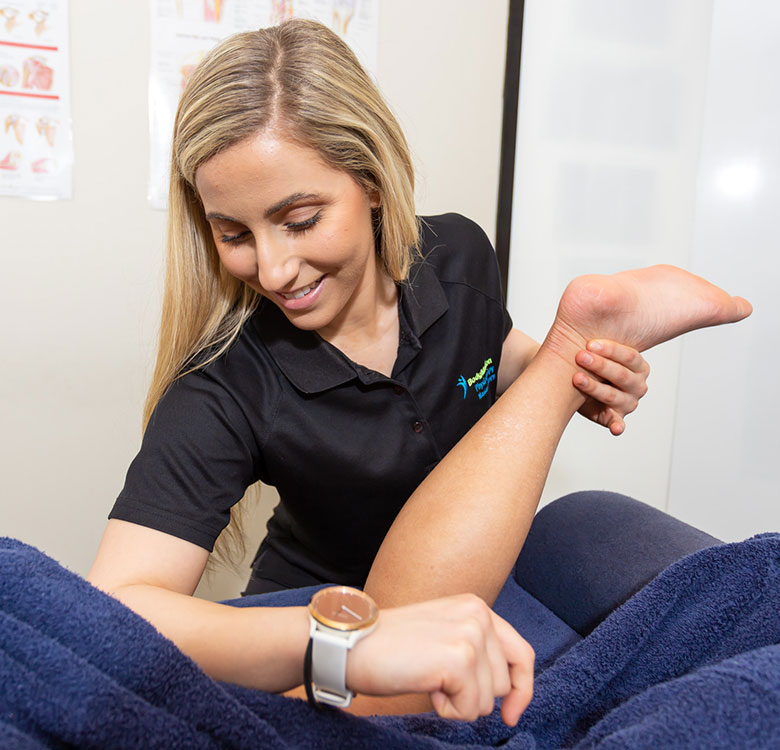
If you’re sidelined by an injury or want to protect yourself this season, our netball physiotherapy programs will get you back on court stronger and smarter.
Book your appointment today or get in touch to ask how our team can support your goals.
The most common injuries in netball include ankle sprains, ACL tears, patellofemoral knee pain, Achilles tendinopathy, and finger dislocations.
A netball physio provides hands-on treatment, tailored exercises, and education to reduce pain, restore function, and prevent further injury.
No referral is required. You can book directly with BodyMotion Physiotherapy.
Yes, we can recommend the right netball ankle or knee support based on your injury and needs.
It depends on the severity and type of injury. Minor strains may take 1–2 weeks; major ligament tears may require months of basketball rehabilitation.
A Relaxation Massage is a great way to pamper yourself, reduce stress and recharge your energy levels. Using a combination of relaxing massage strokes, usually with a lighter pressure, you can opt for a full body massage or choose the areas you would like to have massaged which can include the back, shoulders, legs, feet, arms, hands, neck, head and face.
This is a therapeutic remedial Maintenance Massage which may be recommended to you by your physiotherapist and aims to help you to maintain the results that you have achieved from your Physiotherapy treatments. This massage will be targeted to the area that you had treated by your physio, and will ensure that the muscles continue to work well together to keep you free of pain.
A remedial Therapeutic or Deep Tissue Massage is generally a deeper, firmer pressure and will target particular areas of tightness and restriction in your muscles. You will be asked to provide feedback throughout this massage to assess if the level of pressure is suitable for the area.
A remedial Sports Massage can help to ease any muscular pain post workout or after you have participated in a sporting activity. It can also be beneficial prior to a sporting event to ensure that your muscles are at their peak state, therefore assisting you to perform at your highest possible level.