
Back pain when you sit, pain travelling down your leg, or neck pain reaching into your arm can make everyday activities difficult. You may also be unsure whether to rest, keep moving or seek treatment.
At BodyMotion Physiotherapy, we can assess your symptoms and help you understand your options. Our approach to disc prolapse physiotherapy focuses on practical advice, appropriate movement and a rehabilitation plan that reflects your daily needs.
Whether your goal is a comfortable workday, getting back to the gym, or playing with your children, an assessment is a useful first step.
What Is a Prolapsed Disc?
Intervertebral discs sit between the bones of your spine, helping absorb loads and allowing movement. Each spinal disc has a tough outer layer surrounding a softer centre.
A prolapsed disc occurs when some of this inner material extends beyond its usual position through a weakened or damaged outer layer. You may also hear the terms herniated disc, prolapsed intervertebral disc or slipped disc. The whole disc does not literally slip out of place.
Disc material can irritate or put pressure on a nearby nerve root. However, disc changes can also appear on scans in people without pain. A scan finding alone does not explain every symptom.
Symptoms of a Prolapsed Disc in the Back or Neck
Symptoms depend on the disc’s location and whether nearby nerves are affected.
Area affected | Possible symptoms | Everyday difficulties |
Lumbar spine: lower back | Back or buttock pain, pain travelling into a leg, tingling, numbness or weakness | Sitting, bending, walking or lifting |
Cervical spine: neck | Neck or shoulder pain, pain travelling into an arm, tingling, numbness or weakness | Turning your head, desk work or using your arm |
Lumbar Disc Prolapse Symptoms
Symptoms of a prolapsed disc in the back may include local pain or pain that extends into the buttock, leg, or foot. When a lumbar nerve root is irritated, this can cause sciatica. Coughing, sneezing, or certain movements may aggravate symptoms.
For broader information about assessment and rehabilitation, explore lower back pain physiotherapy.
Neck Disc Prolapse Symptoms
A disc prolapse in the neck may irritate a nerve supplying the shoulder, arm or hand. Alongside neck pain, you may notice pins and needles, altered sensation or reduced strength. Arm symptoms can sometimes be more noticeable than the neck pain itself.
These symptoms have several possible causes, so a professional should assess them rather than self-diagnose.
Learn more about our neck pain physiotherapy services.
What Causes Disc Prolapse?
Disc prolapse often results from a combination of changes within the disc and the loads placed on it. Disc tissues change over time, and repeated heavy loading or an injury may contribute.
Sometimes symptoms begin after lifting or bending. In other cases, no clear incident occurs. A painful episode does not necessarily mean you have permanently damaged your back or must avoid movement indefinitely.
Understanding what aggravates your symptoms can help guide temporary adjustments while you gradually rebuild activity.
How Is Disc Prolapse Assessed?
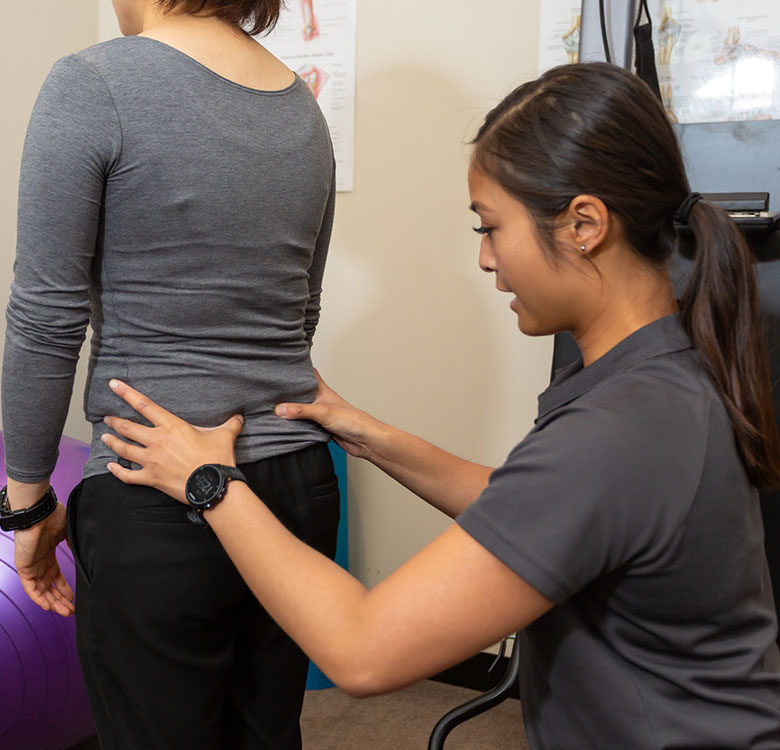
Assessment begins with your story: where symptoms occur, when they started and how they affect your day. Tell your physiotherapist about changes in sensation, strength, walking or bladder and bowel function.
A physical examination may include checking movement, muscle strength, sensation and reflexes. These findings help determine whether nerve involvement is suspected and whether you need medical review.
An MRI scan or CT scan is not automatically needed. Your clinician will consider whether imaging could change your management, particularly where symptoms persist, or concerning signs develop. Scans should be interpreted alongside your examination.

How Can Physiotherapy Help a Prolapsed Disc?
Physiotherapy for a prolapsed disc aims to help you manage symptoms and rebuild your ability to move, work and exercise. Your plan should reflect your assessment, priorities and response to treatment.
Understand Your Symptoms and Daily Triggers
We can discuss the activities you find difficult and plan manageable changes, including changing positions during desk work, adjusting a gym session, or breaking a demanding task into smaller stages.
Bring specific questions to your appointment. Knowing that driving is your biggest problem, for example, helps us focus the discussion on something that matters to you.
Build an Individual Exercise Programme
Your programme may include mobility work, strengthening and a gradual return to activities you enjoy. Exercise selection should account for your abilities and preferences, with progress reviewed as symptoms change.
We can explain what each exercise is intended to do, how to perform it and when to seek a review. The aim is to give you a plan you can understand and follow between appointments.
Use Hands-On Treatment Where Appropriate
Treatment for muscles and other soft tissues may form part of your care. For lower back pain, manual therapy should support an exercise-based programme rather than replace it.
If pain is difficult to manage, your GP can assess medication options. Medicines such as muscle relaxants require individual medical consideration and are not suitable for everyone.
Prolapsed Disc Exercises: What May Help?
The best exercise for a prolapsed disc depends on your symptoms, examination and current capacity. A routine that suits someone else may not suit you.
The following are starting points for a discussion with your physiotherapist, rather than a prescription to try every movement.
Walking and Gentle Activity
You can gradually introduce gentle activity, including walking, as tolerated. Ask your physiotherapist how to choose a starting amount and when to increase it. A useful plan should fit your current abilities and give you a clear way to review your response.
Individually Selected Mobility Exercises
Select mobility exercises for the affected area. For example, ask whether lying on your stomach or an extension-based movement is appropriate for your lower back symptoms before copying an online demonstration.
Neck symptoms require their own assessment. Do not assume that exercises prescribed for a lumbar disc prolapse also apply to the cervical spine.
Progressive Strength and Core Stability
Strengthening may form part of rehabilitation, with exercises selected for your goals. Ask how core stability work fits into your programme, what technique to use and how to progress. Your plan should specify the exercise, amount and review points.
Stop an exercise if it worsens your symptoms, and seek advice. New or increasing numbness or weakness needs prompt assessment; severe or rapidly worsening weakness needs urgent care.

Returning to Work, Exercise and Everyday Activities
Tell your physiotherapist what you want to return to and what currently gets in the way. A desk worker, a tradesperson and someone training for sport may need different practical plans.
Questions worth discussing include:
- Work: How can I adjust tasks or positions during the day?
- Exercise: What can I continue, and what needs a temporary modification?
- Lifting: How should I rebuild the tasks that currently worry me?
- Progress: Which changes should prompt a review?
Keep a brief record of the activities you can manage and any changing symptoms. This gives you concrete information to discuss at follow-up appointments.
When to Seek Urgent Medical Help
Go to an emergency department immediately if back or neck symptoms occur with new difficulty passing urine, loss of bladder or bowel control, numbness around the genitals or bottom, or severe or rapidly worsening limb weakness.
Call 000 if you need an ambulance.
New problems with walking, balance or hand coordination also need urgent medical assessment, particularly with neck symptoms. Occasionally, pressure within the spinal canal can affect the spinal cord or the nerves controlling bladder and bowel function. Do not wait for a routine physiotherapy appointment.
Book a Disc Prolapse Assessment at BodyMotion
You do not need to work out the cause of your symptoms before asking for help. If back pain, neck pain or radiating symptoms are affecting your routine, BodyMotion Physiotherapy can assess your presentation and discuss the next steps.
Bring any existing scan reports and let us know what you most want to get back to. We will use that information to help shape your rehabilitation goals.
Frequently Asked Questions on Disc Prolapse
Is a Prolapsed Disc the Same as a Herniated Disc?
These terms are commonly used to describe disc material extending beyond its usual position. “Slipped disc” is another familiar term, although the whole disc does not move out of place.
Can a Prolapsed Disc Improve Without Surgery?
Yes. Many people improve without surgery. A specialist review may be needed if symptoms do not improve with appropriate care or if neurological symptoms worsen. Recovery and treatment decisions depend on your individual presentation.
Is Pilates Suitable for a Prolapsed Disc?
Pilates may be an exercise option after assessment, with movements adapted to your symptoms and abilities. Evidence for general lower back pain does not mean every Pilates class suits a symptomatic disc prolapse. Ask your physiotherapist about appropriate modifications before starting.
Do I Need a Scan Before Seeing a Physio?
Usually, you can arrange an initial assessment without a scan. If you already have an MRI scan or CT scan report, bring it with you. Your clinician can advise whether further investigation is appropriate.
Can Acupuncture Help With Disc Prolapse?
Acupuncture is not an established treatment for repairing a prolapsed disc. NICE guidance recommends against acupuncture for lower back pain with or without sciatica. Discuss treatment choices with your clinician, including the evidence and how they fit into your wider rehabilitation plan.
What Does Prolapsed Disc Neck Treatment Involve?
Treatment may include advice, appropriate neck and upper-limb exercises, and adjustments to aggravating activities. Your clinician should monitor strength and sensation and identify any need for medical referral. New balance problems, hand clumsiness or worsening weakness require prompt medical assessment.